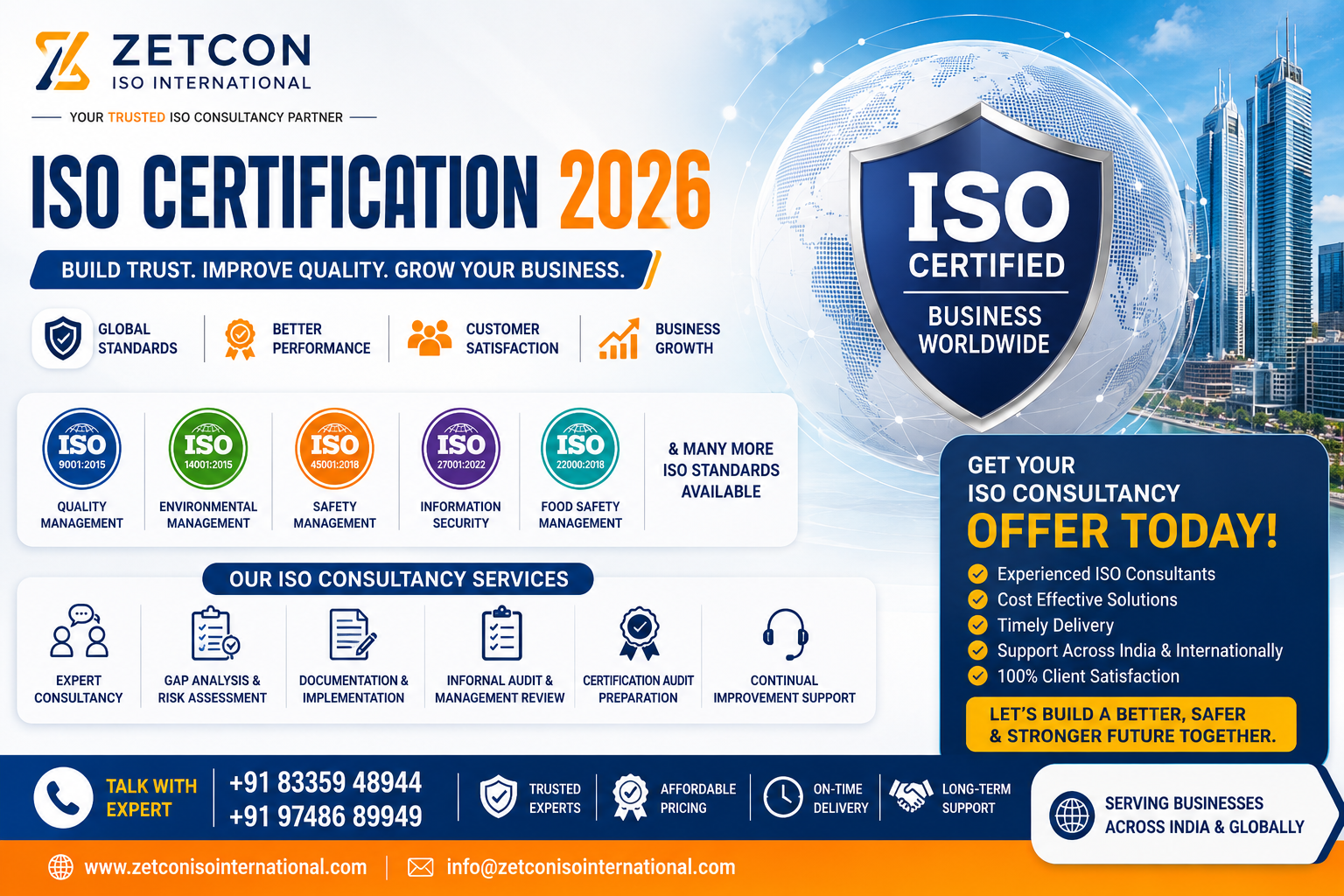
In 2026, businesses are increasingly adopting internationally recognized management systems to improve quality, strengthen information security, manage environmental responsibilities, and create safer workplaces. ISO certification can help organizations demonstrate their commitment to consistent processes, risk management, customer satisfaction, and continual improvement.
Whether you operate a small business, manufacturing company, IT organization, healthcare facility, construction company, or food business, selecting the right ISO standard can provide a structured approach to improving your operations.
What Is ISO Certification?
ISO certification is an independent assessment of an organization's management system against the requirements of a specific ISO standard. Certification is performed by an independent certification body, while consultants can assist organizations with implementation and preparation.
The applicable standard depends on the organization's activities and objectives. Some of the most widely used standards include:
- ISO 9001 – Quality Management System
- ISO 14001 – Environmental Management System
- ISO 45001 – Occupational Health & Safety Management System
- ISO 27001 – Information Security Management System
- ISO 22000 – Food Safety Management System
- ISO 50001 – Energy Management System
- ISO 13485 – Quality Management for Medical Devices
ISO Certification Process in 2026
Although the exact process can vary according to the standard and organization, businesses generally follow several important stages.
1. Select the Appropriate ISO Standard
First, identify the ISO standard that matches your business activities, risks, customer requirements, and objectives.
2. Gap Assessment
A gap assessment compares your existing processes with the applicable ISO requirements. It helps identify areas that need improvement before the certification audit.
3. Documentation and Implementation
The organization develops or updates relevant policies, procedures, records, objectives, and operational controls. Employees should understand their responsibilities within the management system.
4. Internal Audit
An internal audit helps determine whether the management system has been implemented effectively and identifies areas requiring corrective action.
5. Management Review
Top management reviews the management system, its performance, objectives, risks, opportunities, and improvement requirements.
6. Certification Audit
An independent certification body evaluates the management system against the applicable ISO standard. If the requirements are successfully met, certification can be issued.
How Much Does ISO Certification Cost in 2026?
There is no single fixed ISO certification cost for every organization. Pricing can depend on several factors, including:
- Type of ISO standard
- Organization size
- Number of employees
- Business activities
- Number of locations
- Complexity of processes
- Existing management systems
- Consultancy requirements
- Certification-audit requirements
For this reason, businesses should request a customized quotation rather than relying on a standard price.
Benefits of ISO Certification for Businesses
Implementing an appropriate ISO management system can provide several business benefits.
Improve Process Efficiency
ISO-based management systems encourage organizations to establish consistent processes, responsibilities, monitoring methods, and improvement activities.
Increase Customer Confidence
Certification can demonstrate that an organization has established a management system that has been independently assessed against a recognized standard.
Better Risk Management
Many ISO standards use a systematic approach to identifying risks and opportunities relevant to organizational objectives.
Support Business Growth
ISO certification may help organizations meet customer or supply-chain requirements and strengthen their position when competing for new business opportunities.
Encourage Continual Improvement
ISO management systems emphasize monitoring, evaluation, corrective action, and continual improvement rather than treating certification as a one-time activity.
Why Hire ISO Certification Consultants?
Implementing an ISO management system can be challenging, particularly for organizations that are unfamiliar with the standard. ISO certification consultants can provide guidance throughout the implementation process.
Consultancy support may include gap assessment, documentation guidance, implementation assistance, employee awareness, internal audit preparation, corrective-action support, and certification-audit preparation.
However, businesses should clearly distinguish between consultancy and certification. A consultant helps prepare and implement the management system, while an independent certification body performs the certification audit.
ISO Certification for Indian and International Businesses
Indian companies increasingly work with international customers and supply chains, making internationally recognized management systems valuable for organizations seeking broader business opportunities.
Businesses in countries such as the UAE, Saudi Arabia, Qatar, Kuwait, Malaysia, Singapore, Canada, Germany, the UK, and other international markets may also adopt relevant ISO standards according to their industry and business requirements.
Choose the Right ISO Standard in 2026
The best ISO certification is not necessarily the one that is most popular. Organizations should select a standard based on their business activities, customer expectations, risks, regulatory environment, and strategic objectives.
For example, a manufacturing organization may benefit from ISO 9001, ISO 14001, and ISO 45001, while an IT or technology company handling sensitive information may consider ISO 27001.
Get Professional ISO Consultancy Support
Zetcon ISO International provides professional ISO consultancy services for organizations seeking to implement and prepare for various ISO management-system standards.
From ISO 9001 certification and ISO 14001 to ISO 45001, ISO 27001, ISO 22000, and other management-system standards, professional guidance can help businesses understand requirements and prepare systematically.
Comments 0